Columbus, OH — Varicose veins can steal your comfort, keep you out of shorts, and make everyday activities feel heavier than they should. If you are in Columbus and wondering where to start, this guide walks you through causes and symptoms, when to see a specialist, your minimally invasive treatment options, typical costs and insurance coverage in Ohio, and how a free 30-minute consultation at Akribis Veins & Vitality helps you build a plan with confidence.
What causes varicose veins, and what do they feel like?
Varicose veins develop when the tiny valves inside your leg veins weaken. Blood can pool, which makes veins enlarge and bulge. You might notice:
- Achy, heavy, or throbbing legs
- Swelling around the ankles
- Itching or cramping, especially at night
- Restless legs that make it hard to sit still or fall asleep
- Bulging, rope like veins or clusters of veins that look twisted
- Skin darkening near the ankle or shin
Risk factors include family history, pregnancy, jobs that keep you on your feet, weight changes, and age. You did not cause this on your own. The problem is mechanical and treatable.
When should you see a vein specialist?
Reach out if you have pain, swelling, restless legs, skin changes, recurrent cramps, or if your veins are worsening. You should also book a visit if a vein becomes tender, red, or warm to the touch. A quick, painless vein ultrasound can reveal whether valve failure is present and which veins are driving your symptoms.
You do not need a referral to see a vein specialist at Akribis. Many patients self-schedule after years of pushing through discomfort. If your primary care doctor has questions, we are happy to coordinate.
What happens if varicose veins go untreated?
Some people live with mild symptoms for years. For others, untreated varicose veins can progress and lead to:
- Increasing pain and swelling
- Skin inflammation or rashes
- Skin discoloration and hardening
- Superficial vein clots called phlebitis
- Venous ulcers near the ankle that are slow to heal
Can varicose veins cause blood clots? Yes. They can increase the risk of superficial clots, which are usually not dangerous but can be painful and may recur. In some cases, underlying venous disease is linked to a higher risk of deep vein thrombosis. Evaluation helps you understand your personal risk and get ahead of complications.
The most successful treatments today
There is no one-size-fits-all fix. The best treatment is the one that targets the vein causing your symptoms with the least downtime. For many patients, the highest success rates come from closing the faulty source vein and then clearing visible branches. Two common options:
Radiofrequency Ablation (RFA):
A very small catheter is placed into the diseased vein under local anesthetic. Gentle radiofrequency energy heats the vein wall from the inside, causing it to seal shut. Blood naturally reroutes to healthy veins. RFA has high success rates, uses tumescent numbing for comfort, and takes about 30 to 60 minutes in the office.
Sclerotherapy:
A tiny needle delivers a medicated solution into small varicose and spider veins so they collapse and fade. This quick, precise treatment is ideal for touch-ups after addressing a source vein or for cosmetic spider veins.
Most patients walk in and out on the same day, return to normal activity quickly, and see progressive improvement over a few weeks.
What to expect with comfort, downtime, and results
Comfort:
Treatments use local numbing and small instruments to keep you comfortable. You may feel brief pressure or warmth, but most patients describe it as very tolerable.
For added relaxation, nitrous oxide (laughing gas) is available during procedures. It helps ease anxiety and keeps you calm without putting you to sleep. The effects wear off quickly, so you can safely drive yourself home afterward.
Downtime:
Walking is encouraged right away. You can drive yourself home, wear compression stockings for a short period, and take a temporary pause from heavy leg workouts.
Results:
Source veins close immediately, and visible improvements appear gradually over the following weeks as your body clears the treated veins. Follow-up sessions, if needed, refine your results for a smoother, more even look.
How Akribis Builds your Plan
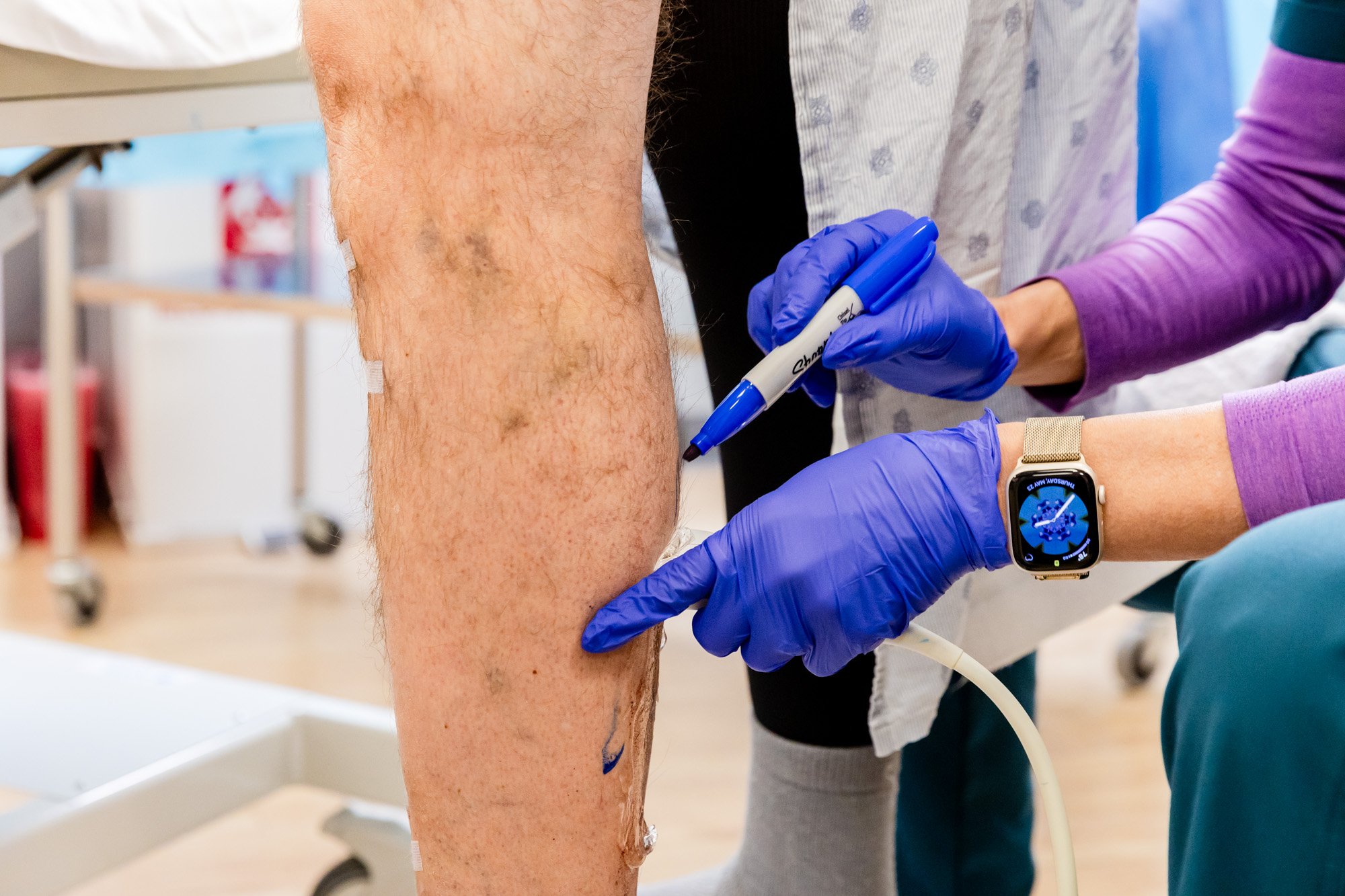
Your visit starts with a focused discussion, a leg exam, and a targeted vein ultrasound to map problem areas. We then design a stepwise plan that may combine radiofrequency ablation for the underlying vein with sclerotherapy for smaller veins. You receive clear instructions, details for each visit, and full support with paperwork and scheduling.
Prefer to start from home? Use our online planning tool, then come in for a free 30-minute consultation to confirm your plan and timeline. We offer flexible appointment times to fit busy work and family schedules.
If you want to learn more about your first visit and testing, our quick guide to vein ultrasound in Columbus explains how we map your veins and why it matters.
Costs in Ohio, and what insurance covers
How much does it cost to get rid of a varicose vein? The answer depends on three factors:
- Medical necessity: If your ultrasound shows reflux and you have symptoms such as pain, swelling, or skin changes, treatments like RFA or medically necessary sclerotherapy are often covered by insurance after conservative therapy, such as a trial of compression stockings.
- The number of veins: Treating one source vein is different from treating both legs or multiple branches. Your plan spells out each step so you are never surprised.
- Cosmetic goals: Spider veins and purely cosmetic touch ups are typically self pay.
Does insurance usually cover varicose vein treatment? Often, yes, when it is medically necessary. We work with most major plans in Ohio, check benefits up front, and explain any deductibles or copays before you start. If a step is cosmetic, we will outline simple bundled pricing. Financing options like Care Credit and Cherry are available to make payments manageable.
Answers at a glance
What is the most successful treatment for varicose veins?
Treatments that close the diseased source vein have the best long-term outcomes. For many patients, this is radiofrequency ablation (RFA), followed by sclerotherapy for smaller surface veins. Your ultrasound determines the right choice.
Can varicose veins cause blood clots?
Varicose veins can lead to superficial clots and may increase the risk for deeper clots in some patients. Evaluation helps assess and reduce your risk.
Do I need a referral?
No. You can book directly, and we coordinate with your primary care doctor as needed.
Getting started in Columbus
You have options, and you do not have to guess which one is right for you. Start with our online tool, then book your free 30-minute consultation. We will review your symptoms, perform vein mapping, and build a plan that focuses on comfort, minimal downtime, and lasting results.
Ready to move from research to relief? Schedule your visit with Akribis Veins & Vitality in Columbus, Ohio for personalized guidance, or explore how minimally invasive vein treatment Columbus fits your goals and schedule.
If you are comparing specialists, meet our board-certified vein specialist in Columbus to see how our approach blends medical expertise with a clear, supportive patient experience.